Planetary Gearboxes – Manufacturing of planetary gears for humanoid robots
Actuators are the fundamental motion elements in humanoid robots – comparable to muscles and joints in a biological organism. They enable precision, human-like motion sequences by converting electrical energy into mechanical motion. In rotary actuators, the planetary gearbox plays a central role as a transmission element. The quality and precision of these components directly determine the achievable speed, power transmission, positioning accuracy, and energy efficiency of the entire robot system.
High-precision gear solutions for rotary actuators in humanoid robots
The importance of planetary gearboxes in humanoid robotics
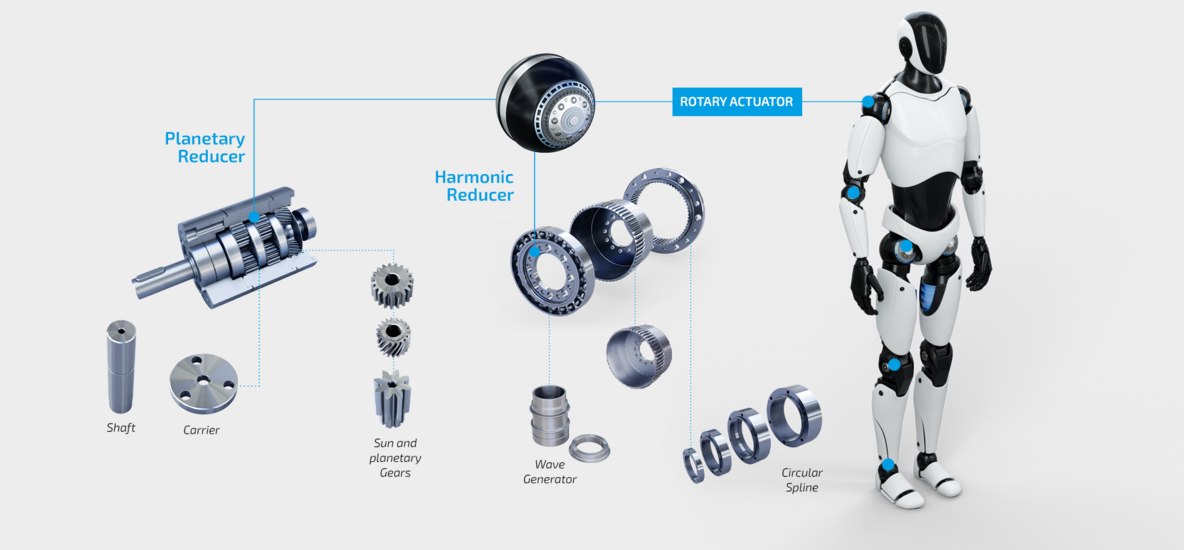
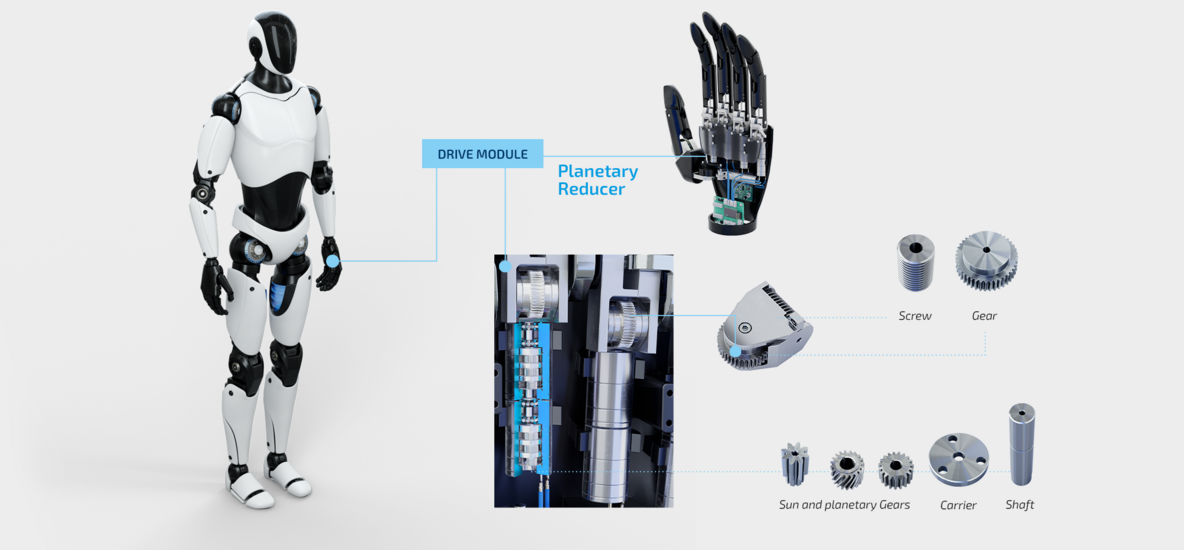
Current humanoid robots require at least 14 rotary actuators distributed across the major joints: three units in each shoulder region for complex arm movements, one unit each at the elbow joints, two units in the hip region for rotation and lateral flexion, and additional units at the knee joints of the legs. As development progresses toward fine motor skills in the hands and more complex ankle joints, this number continues to rise.
Technical Characteristics: Planetary Gearboxes
The operating principle of the planetary gearbox is based on the rotation of several planetary gears around a central sun gear, whereby these are simultaneously in mesh with an outer ring gear (tooth ring). This arrangement enables a compact design while providing excellent load distribution across multiple tooth flanks that are simultaneously in mesh. This results in a high torque-to-size ratio, making the planetary gear ideal for applications with limited installation space. The symmetrical arrangement also ensures inherent balance, which minimizes vibrations and ensures smooth operation across the entire speed range.
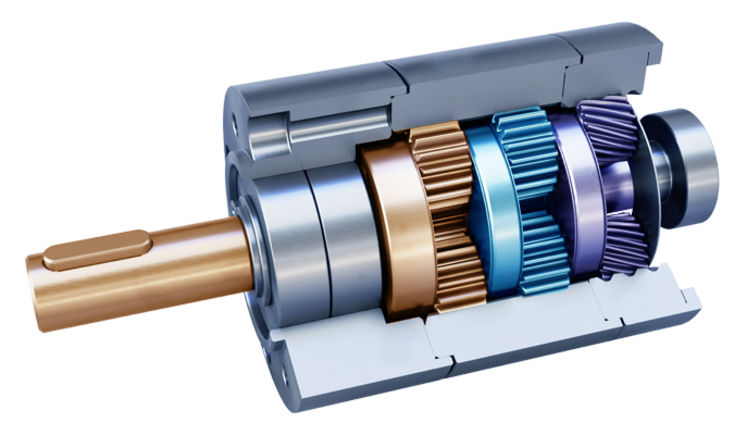
While planetary gearboxes offer compact dimensions and high load-carrying capacity, their single-stage gear ratio remains limited compared to strain wave gears or cycloidal drives. To achieve high overall gear ratios – such as 100:1 – multi-stage configurations are required, which introduce additional complexity in terms of transmission accuracy and positioning precision. Thus, planetary gearboxes are ideal for applications requiring moderate gear ratios with high load capacity, including larger articulated actuators and applications where the load capacity of strain wave gears is insufficient.
The gripper hands of humanoid robots represent a particularly interesting application. These compact mechanisms often use miniaturized planetary gears in combination with hollow-shaft motors or ball screws to achieve the fine motor control required for manipulation tasks.
Process chain for the manufacture of precision planetary gears
Soft machining prior to heat treatment
- Soft turning (VL 2): During the turning of the blank, the primary reference surfaces (bore and flat sides) as well as the geometry are produced.
- Gear cutting (K 160): Hobbing of the tooth profiles to quality class 7 according to DIN 3960/-62 or ISO 1328
- Case hardening: The carburizing heat treatment achieves a surface hardness of HRC 60 ± 2, thereby ensuring the wear resistance essential for long service life.
Hard machining after heat treatment
- Internal grinding (UG/VLC GT): The hard machining of the bore and the end faces creates the critical reference surfaces for the subsequent hard finishing of the tooth profiles. In particular, the combination of hard turning and internal grinding based on the VLC series delivers significant added value here. The end faces on both sides are machined in a single setup via hard turning. The inner bore is pre-turned and then ground to achieve the desired bore quality (form, position, and roughness).
- Skinning: Skinning after heat treatment achieves the final tooth geometry with tolerances that meet or exceed DIN quality class 6.
Alternative hard finishing of the gearing
In addition to shaving, two grinding processes are available for the hard finishing of tooth profiles:
- Cylindrical or Profile Grinding – High Productivity with Tight Tolerances
Gear generating grinding is ideal for the high-productivity grinding of planetary gears. It enables gear tooth quality of DIN Class 5–6 to be achieved with very good surface tolerances. EMAG offers the G 160 for this purpose. Alternatively, both gear and profile grinding can be performed on the G 250 HS with a high-speed grinding head. Equipping the machine with very small profile grinding wheels also enables the machining of sun gears with limited run-out. - Profile Grinding – Maximum Flexibility on a Single Machine
For very small components and a wide variety of parts, profile grinding offers a decisive advantage: planetary gears, sun gears, and internal gear teeth can be manufactured on a single machine. The G 375 H horizontal profile grinding machine is designed precisely for this application. It operates with very small grinding wheels and, with an optional internal grinding arm, can also perform machining of internal gear teeth. Thanks to extremely short setup times, it is suitable not only for series production but also for development projects and small-batch production with varying component geometries.
Alternative manufacturing process: grinding from solid stock
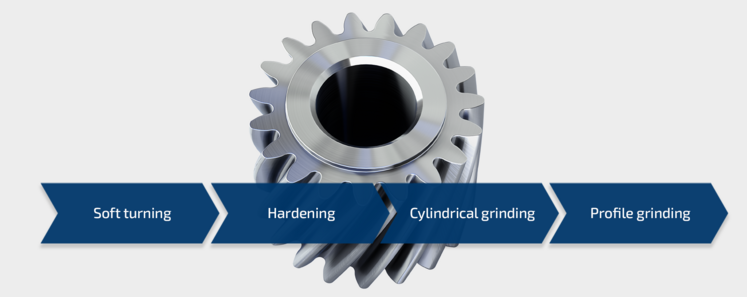
Geared components with small modules can be manufactured particularly cost-effectively using an alternative manufacturing process. In this process, the gear cutting is performed directly from solid material after hardening. Pre-gearing is completely eliminated, as the hardening depth is sufficient for small modules to cover the entire tooth geometry. The process chain is thus shortened to:
Achieving Grade 4 quality prior to hardening
While Class 5 gear quality represents the industry’s entry threshold, emerging applications in humanoid robotics increasingly require Class 4 quality prior to the hardening process. Since hardening typically degrades gear quality by one to two classes, this requirement is crucial for ensuring a reliable Class 5 or better on the finished component after heat treatment.
Precision Gear Manufacturing for Humanoid Robot Actuators
Meeting the quality and productivity requirements in the manufacture of actuators for humanoid robots requires specialized machine tool solutions that address the unique challenges of miniature precision gear cutting. The integration of automated workpiece handling, in-process measurement, and advanced machine control creates production systems capable of consistently maintaining the required tolerances even in high-volume production.
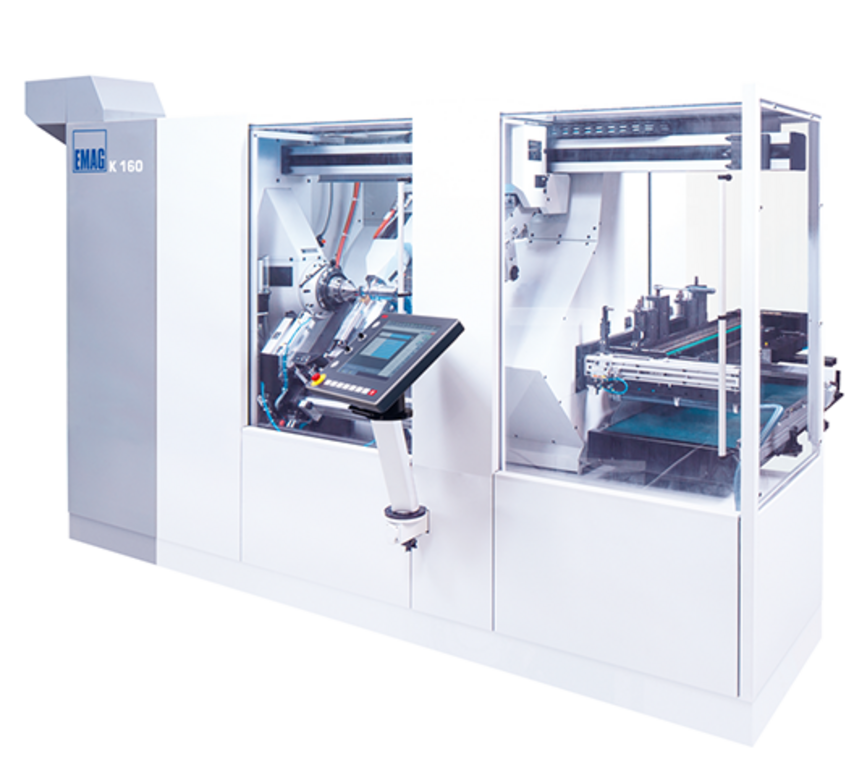
Machine platform: K 160
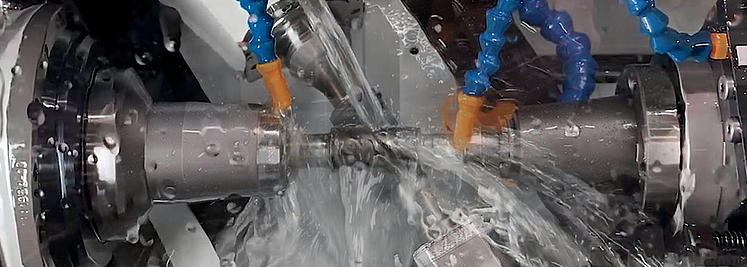
The K 160 gear cutting center addresses the specific requirements of small-module gear cutting. The machine base made of mineral cast iron offers exceptional thermal stability and maintains geometric accuracy despite fluctuations in ambient temperature and heat generation during machining. The open machine design facilitates workpiece loading and accessibility during setup, while the fluid-cooled direct drives (on the main and tool spindles) provide the synchronization between workpiece and tool rotation that is essential for achieving the target tolerances.
More Information
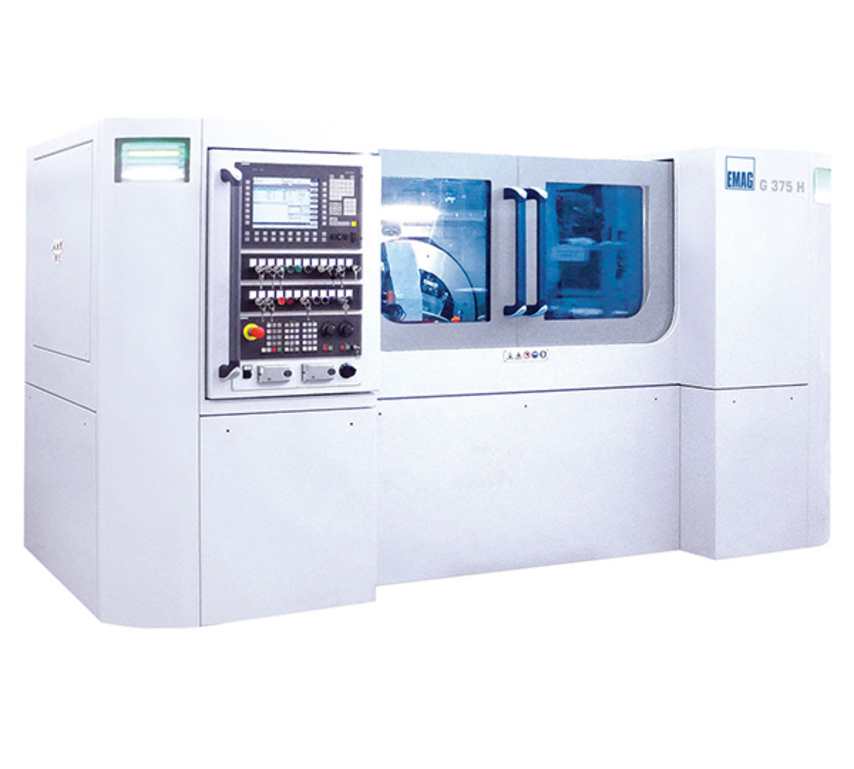
Machine platform: G 375 H – Horizontal profile grinding machine
The G 375 H is a horizontal profile grinding machine that performs machining on planetary gears, sun gears, and – with an optional internal grinding arm – internal tooth profiles. This allows all gear components of a compact planetary gearboxes to be ground on a single machine. Thanks to the ability to work with very small grinding wheels, the G 375 H is particularly suitable for workpieces with complex contours where conventional grinding machines reach their limits. The tooth profiles can be ground on both pre-cut workpieces and from solid stock after hardening. The result: a machine platform capable of performing grinding on all the gear components of a compact planetary gearbox to outstanding quality – making it the most flexible solution for this application.
More InformationTechnologies

Technologies
During the machining of the tooth flanks of shafts and gears by means of generating grinding or gear grinding, it is important to achieve…
The combination of a number of processes – such as hard turning and grinding – on a single machine, allows for the exploitation of considerable…
Flexible, highly productive, highly accurate - as a continuous gear production process, hobbing is indispensable in many industries, as it allows any…
Profile grinding of gears and long, slim and toothed components is performed discontinuously, i.e., tooth gap by tooth gap, is completed one after the…
Vertical turning is a machining process for metal components. EMAG was one of the first machine tool manufacturers to use the vertical turning process…
Workpieces
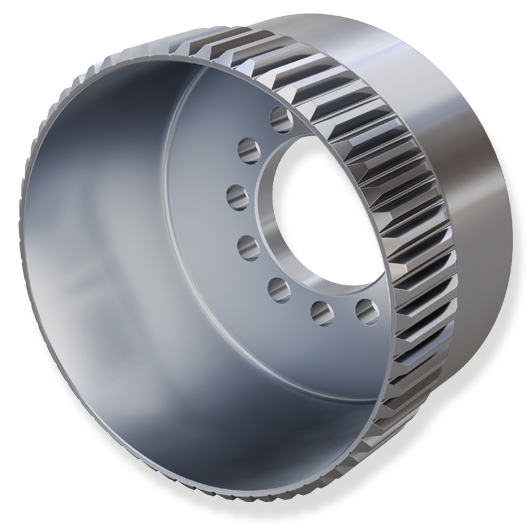
Flexspline
Flexsplines, also known as flexible shaft gears, flex pots, or collar sleeves, form the heart of harmonic reducers. These high-precision components enable very high reduction ratios in a single gear…
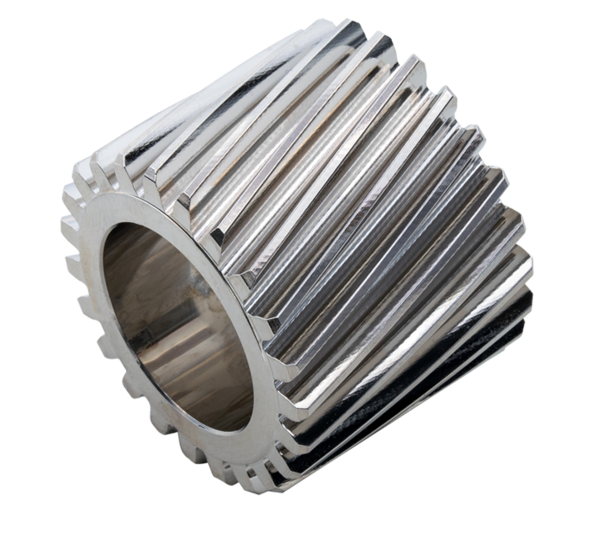
Planetary Gears
Wave Generator
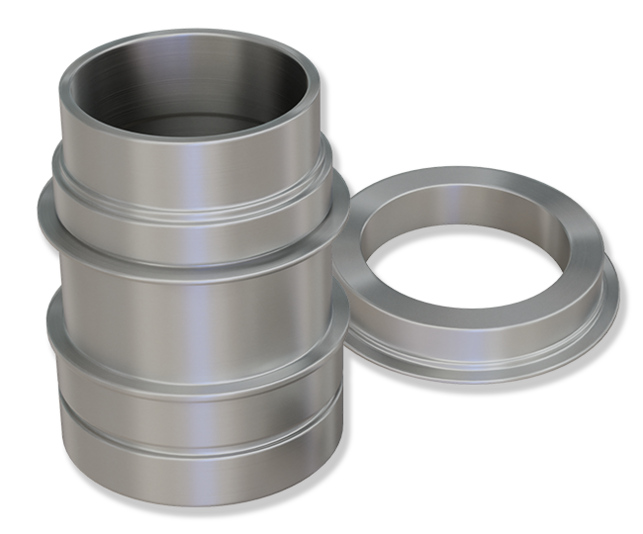
The wave generator is the input component in the strain wave gear. It consists of a thin-walled bearing structure (outer ring elastic, inner ring fixed on an elliptical cam) and defines the positive…